

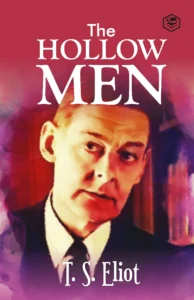
| Title | The Hollow Men |
|---|---|
| Author Name | T. S. Eliot |
| Type | Modernist Literature |
| Published | 1925 |
| Number of Copies Sold | Not publicly available |
| Online | Available |
The Hollow Men by T. S. Eliot most famous and influential poems, first published in 1925. It stands among the defining works of modernist literature, capturing the spiritual emptiness, fear, and despair of the human condition with striking depth. Its distinctive style and rich symbolism have made it a landmark of 20th-century poetry.
More Books
Interesting Fact About The Hollow Men
An interesting fact about The Hollow Men by T. S. Eliot is that its title and mood feel closely connected to Eliot’s earlier and equally famous poem, “The Waste Land” (1922). Both works reflect the spiritual and cultural crisis of the post-war generation, but The Hollow Men presents this emptiness in an even more intense and deeply personal way.
Best Quote from the Poem
One of the most memorable lines associated with the poem describes how the world will end not with a dramatic explosion, but quietly, with a whimper. This closing image is among the most widely quoted lines in all of literary history.
Summary of The Hollow Men by T. S. Eliot
The poem is divided into five sections, and its central idea revolves around people who are outwardly alive but inwardly empty and purposeless the “hollow men.” These figures are unable to fully commit to either good or evil; instead, they remain trapped in a hesitant, undecided state between action and inaction.
Eliot compares these figures to scarecrows stuffed with straw, making hollow, meaningless sounds in the wind without purpose or genuine feeling. Themes of death, darkness, and barren landscapes recur throughout the poem, reinforcing the idea of humanity’s spiritual death.
What Is The Hollow Men About?
The Hollow Men by T. S. Eliot explores a state of paralysis a condition in which people exist without conviction, faith, or the courage to act. Rather than depicting active suffering, the poem portrays a quieter, more unsettling kind of despair: the absence of meaning itself.
The poem draws on references from Dante’s Inferno and Joseph Conrad’s Heart of Darkness, layering its imagery with deeper literary and philosophical resonance.
Main Themes in The Hollow Men
Spiritual Emptiness: The poem’s central theme is that people may appear to be living, yet their inner selves their souls have become hollow and lifeless.
Fear and Paralysis: The characters are unable to make decisions; they neither fully embrace good nor evil, remaining stuck in a fearful, in-between state.
Death and the Afterlife: The poem repeatedly references two “kingdoms” of death — “death’s dream kingdom” and “death’s other kingdom”illustrating an incomplete state between life and death.
Loss of Meaning and Faith: The poem reflects the breakdown of traditional religious and cultural values in the aftermath of war, a central concern of the modernist movement.
Why Is The Hollow Men Important?
This poem holds lasting importance because:
- It is a defining example of modernist poetry
- It expresses the spiritual crisis of humanity with remarkable depth
- Its symbolism and imagery remain widely studied in literature today
- Its unforgettable closing lines about how the world ends have entered popular culture permanently
- It gives voice to the disillusionment of the post-World War generation
Key Lessons from The Hollow Men by T. S. Eliot
Meaningful Living Matters: Simply existing is not enough life requires purpose and genuine conviction.
Indecision Has a Cost: Failing to choose is itself a choice, and it can leave a person feeling hollow inside.
Face Your Fears: Avoiding fear prevents people from taking meaningful action, as shown through the poem’s paralyzed figures.
Not All Endings Are Dramatic: Change or decline doesn’t always arrive with force sometimes it comes quietly, almost unnoticed.
Who Should Read The Hollow Men?
This poem is ideal for:
- Readers interested in modernist poetry
- Those who enjoy exploring symbolism and layered imagery
- People reflecting on questions of purpose and spiritual meaning
- Literature students studying 20th-century poetry
- Anyone interested in philosophy and human psychology.
FAQs
Who wrote The Hollow Men?
The Hollow Men was written by T. S. Eliot, a renowned Anglo-American poet and literary critic.
When was The Hollow Men by T. S. Eliot published?
The poem was published in 1925.
What is the main theme of the poem?
The poem centers on spiritual emptiness, fear, and a lack of purpose in human life.
How many sections does the poem have?
The Hollow Men by T. S. Eliot is divided into five sections.
Is the poem difficult to understand?
Its symbolism and literary references including allusions to Dante and Joseph Conrad make it somewhat challenging, but its overall mood and message are accessible to most readers.
Conclusion
The Hollow Men by T. S. Eliot is a powerful and deeply reflective poem that captures inner emptiness and fear with striking beauty. Its imagery, symbolism, and unforgettable final lines have secured its place as one of the most significant poems in literary history. The poem reminds us that merely existing is not enough a truly meaningful life is built on purpose, decisive action, and genuine feeling.